
Table of Contents
Ever bitten into something so perfectly balanced – crispy on the outside, impossibly soft and gooey on the inside, drenched in sweet syrup, yet not overwhelmingly so? If you haven't, you might not have encountered the legendary jordanian cheese dessert known as Kanafeh. It's more than just a sweet treat; it's a cultural icon, a dessert that sparks fierce debates about who makes it best and whether it should be eaten hot off the grill or slightly cooled. Forget those generic pastries; Kanafeh brings a unique combination of textures and flavors to the table, starring a special kind of cheese you wouldn't typically find in a dessert in other parts of the world.
What Exactly is Kanafeh, the Famous Jordanian Cheese Dessert?
What Exactly is Kanafeh, the Famous Jordanian Cheese Dessert?
Alright, let's cut to the chase about Kanafeh, that celebrated jordanian cheese dessert you keep hearing about. Picture this: thin, noodle-like pastry threads, often called kadaif or kataifi, are pressed together with a generous layer of soft, sweet cheese in the middle. This whole assembly gets baked or cooked on a large, round tray until the pastry is golden brown and impossibly crispy, and the cheese inside is perfectly melted and stretchy. Right when it comes off the heat, it gets absolutely drenched in a fragrant sugar syrup, often scented with rose water or orange blossom water. The result? A hot, gooey, crunchy, sweet, and slightly savory concoction unlike much else out there. It’s the kind of dessert that demands to be eaten immediately, preferably standing around a steaming tray with friends, because the magic happens when it's fresh and the cheese is still pulling.
Unpacking the Sweet Layers: Ingredients in Jordanian Cheese Dessert
Unpacking the Sweet Layers: Ingredients in Jordanian Cheese Dessert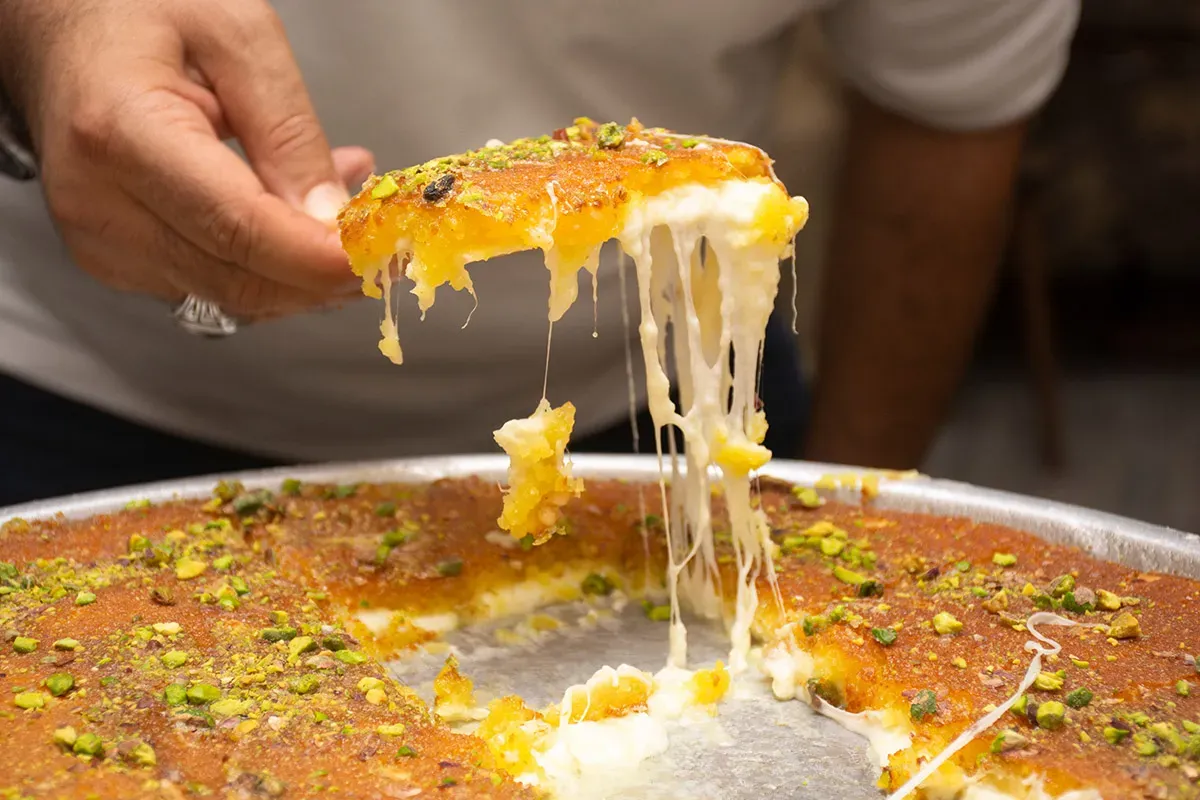
So, what makes this jordanian cheese dessert tick? It boils down to a few core players, each bringing something crucial to the party. First up, the star pastry: those fine, vermicelli-like strands called kadaif or kataifi. Think of them as super-thin noodle cousins, often pre-cooked slightly, that crisp up beautifully when baked. Then there's the cheese. This isn't your typical cream cheese or ricotta you might find in cheesecake. The classic choice is Akawi cheese, a semi-hard, unsalted or lightly salted cheese that gets incredibly gooey and stretchy when heated. It's the elasticity that's key; it stretches and pulls, creating that signature melting center. You usually need to soak Akawi to get rid of excess salt, making it suitable for a sweet dish. Binding it all together is a generous amount of clarified butter, or samneh/ghee, which gives the pastry its rich flavor and helps it achieve that perfect, golden crispness as it cooks. Finally, the finishing touch is the simple sugar syrup, often infused with fragrant rose water or orange blossom water, poured over the hot pastry to soak in and add sweetness and aroma.
From Ancient Roots: The History of This Jordanian Cheese Dessert
From Ancient Roots: The History of This Jordanian Cheese Dessert
Tracing the Sweet Threads Back in Time
Pinpointing the exact birthplace of the jordanian cheese dessert we know as Kanafeh is tricky business. Food history often gets fuzzy the further back you go, relying on whispers and old texts. One popular tale places its origin in the Umayyad Caliphate in Damascus back in the 7th century. The story goes that it was created to satisfy the hunger of a caliph during Ramadan. Another theory suggests it came from the city of Nablus in Palestine, which today is practically synonymous with the dessert. Nablus is famous for its specific version, Knafeh Nabulsiyeh, using a unique local cheese. While the precise "Patient Zero" of Kanafeh remains debated, it's clear this wasn't some recent invention. It has deep roots in the culinary landscape of the Levant.
From Royal Tables to Street Corners
Regardless of its precise ancient starting point, the jordanian cheese dessert certainly gained prominence and spread throughout the region over centuries. It wasn't always just a street food; some accounts mention it being served in palaces. As empires rose and fell, and trade routes connected cities, the recipe and its variations traveled. Different regions adapted it based on local ingredients and preferences, leading to the diverse family of cheese pastries we see today, all sharing a common ancestor. The dessert became particularly important during festive times, especially Ramadan, where breaking the fast with something sweet and satisfying is a cherished tradition. Its journey from potentially royal kitchens to becoming a beloved, accessible dessert sold in bustling markets speaks volumes about its enduring appeal.
- Possible origins debated: Damascus (Umayyad era) or Nablus (later prominence).
- Early accounts suggest presence in elite settings.
- Spread via trade and cultural exchange across the Levant.
- Became strongly associated with festive occasions like Ramadan.
- Regional variations developed based on local cheeses and techniques.
Beyond Jordan: Regional Variations of the Cheese Pastry
Beyond Jordan: Regional Variations of the Cheese Pastry
Nablus's Claim to Fame and Turkish Twists
While we're talking about the delicious jordanian cheese dessert, it's crucial to acknowledge that this sweet, cheesy goodness isn't confined to Jordan's borders. Travel a bit, and you'll find its cousins thriving under different names and with subtle (or not-so-subtle) variations. Nablus, in Palestine, is often cited as a major hub, practically declaring itself the capital of Knafeh. Their version, Knafeh Nabulsiyeh, typically uses a specific Nabulsi cheese, which melts into that signature stretchy consistency, and often features a vibrant orange dye on the pastry layer. Move further north to Turkey, and you encounter Künefe. This version often uses a cheese called Antakya cheese or dil peyniri (a stringy, mozzarella-like cheese) and is cooked on smaller, individual metal plates, often over direct heat. The syrup can sometimes lean a bit less on the floral notes and more on straightforward sweetness.
Lebanese Takes and Other Regional Flavors
Lebanon also boasts its own beloved take on this cheese pastry, frequently called Knefeh bi-jibn. While similar in principle, you might find variations in the cheese blend used, sometimes incorporating mozzarella alongside traditional Akawi for that desired melt. The syrup might have a stronger hint of rose or orange blossom, depending on the maker. Even within a single country, you'll find local quirks – some prefer a thicker layer of cheese, others a crispier pastry base. Some sprinkle finely ground pistachios over the top, others opt for walnuts or serve it plain. It's a testament to the dessert's adaptability and how local palates and ingredients have shaped its evolution, creating a delicious family of cheese pastries across the region, each with its own loyal following.
Region | Common Name | Typical Cheese | Key Characteristics |
|---|---|---|---|
Jordan/Palestine (Nablus) | Kanafeh/Knafeh Nabulsiyeh | Akawi, Nabulsi cheese | Often bright orange, very stretchy cheese. |
Turkey | Künefe | Antakya cheese, Dil peyniri | Often cooked on individual plates, sometimes less floral syrup. |
Lebanon | Knefeh bi-jibn | Akawi, Mozzarella blend | Variations in syrup flavour and cheese mix. |
Making Your Own or Finding the Best: Enjoying Jordanian Cheese Dessert
Making Your Own or Finding the Best: Enjoying Jordanian Cheese Dessert
Taking the Plunge: Attempting This Jordanian Cheese Dessert at Home
So, you've read about this glorious jordanian cheese dessert, Kanafeh, and maybe you're thinking, "How hard can it be?" Let me be straight with you: it's not exactly whipping up instant pudding. Making authentic Kanafeh involves wrestling with a few specific ingredients that aren't always sitting in your average supermarket. Finding good quality kadaif pastry can be the first hurdle. Then there's the cheese – getting the right kind, like Akawi, and properly de-salting it requires patience. Skimp on the clarified butter, and you'll end up with a dry, sad imitation. It's a project, for sure, but tackling it can be incredibly rewarding, like conquering a culinary Everest in your own kitchen.
Secrets to a Successful Homemade Jordanian Cheese Dessert
If you're determined to make this jordanian cheese dessert yourself, here are a few pointers to save you some heartache. First, source your ingredients carefully. Look for kadaif in Middle Eastern or specialty grocery stores, usually in the freezer section. For the cheese, Akawi is ideal, but if you absolutely can't find it, some people use a mix of low-moisture mozzarella and ricotta, though it won't have the same classic stretch. De-salting Akawi is non-negotiable; soak it in water, changing the water several times over a few hours or even overnight, then drain and shred it well. Don't be shy with the clarified butter; coating the kadaif properly is key to getting that crisp texture. Pressing the layers down firmly in the pan helps create a compact, even pastry. And for the love of all that is sweet, pour the hot syrup over the hot Kanafeh right when it comes out of the oven or off the stove. That sizzle and soak is part of the magic.
- Source authentic kadaif pastry.
- Use Akawi cheese and soak it thoroughly to remove salt.
- Don't underuse clarified butter.
- Press the pastry layers firmly in the pan.
- Pour hot syrup over hot Kanafeh immediately after cooking.
The Quest for the Best: Finding Kanafeh Outside Your Kitchen
Maybe the idea of de-salting cheese and wrestling with delicate pastry feels like too much work. Fair enough. The good news is that finding fantastic jordanian cheese dessert, especially in areas with a Middle Eastern population, is often quite possible. Look for bakeries or sweet shops that specialize in Levantine pastries. The best places usually make it fresh throughout the day and serve it hot. Don't be afraid to ask when the next batch is coming out. A sign of a good place is often a large, well-worn round tray visible behind the counter, maybe even still warm. Eating Kanafeh is an experience; grab a piece (or two), find a spot to stand, and enjoy that perfect, fleeting moment of hot, gooey, crispy, syrupy bliss before it cools down. It's a simple pleasure, done right.
The Last Bite: Why Kanafeh Sticks With You
So there you have it. Kanafeh isn't just some random sweet thing; it's a carefully constructed jordanian cheese dessert, a masterclass in balancing textures and flavors you might not expect to work together. That stretchy, slightly salty cheese meeting the crisp, buttery threads of dough, all soaked in fragrant syrup – it’s a combination that bypasses simple sweetness and lands squarely in the realm of genuinely memorable food experiences. Whether you seek out a legendary shop known for its generations-old recipe or attempt to tackle it in your own kitchen, tasting Kanafeh offers a direct connection to a rich culinary history. It’s the kind of dessert that silences a room, at least until the satisfied murmurs begin. Give it a shot; you might just find your new favorite.