Table of Contents
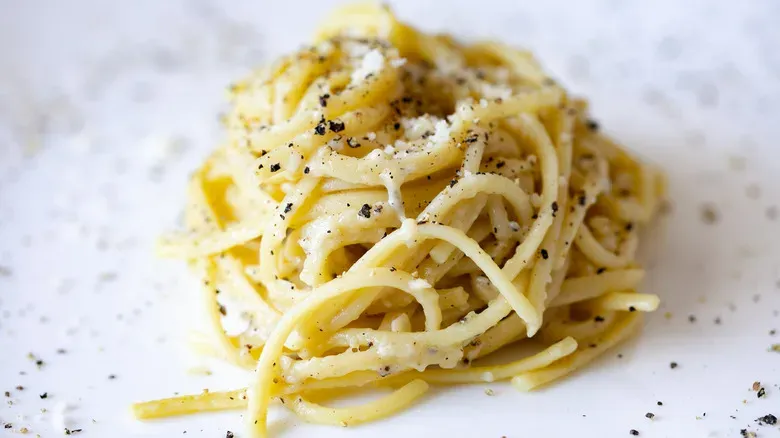
Picture this: you're scanning that famously thick menu at The Cheesecake Factory, past the mile-high cheesecakes and the endless pasta options. Then you spot it: Cacio e Pepe. If you know classic Italian pasta, you might pause. Cacio e Pepe is traditionally a simple, almost minimalist dish – just pasta, black pepper (pepe), and cheese (cacio, specifically Pecorino Romano). It relies entirely on technique and ingredient quality to create a creamy, peppery sauce emulsion.
What Exactly is Cacio e Pepe?
What Exactly is Cacio e Pepe?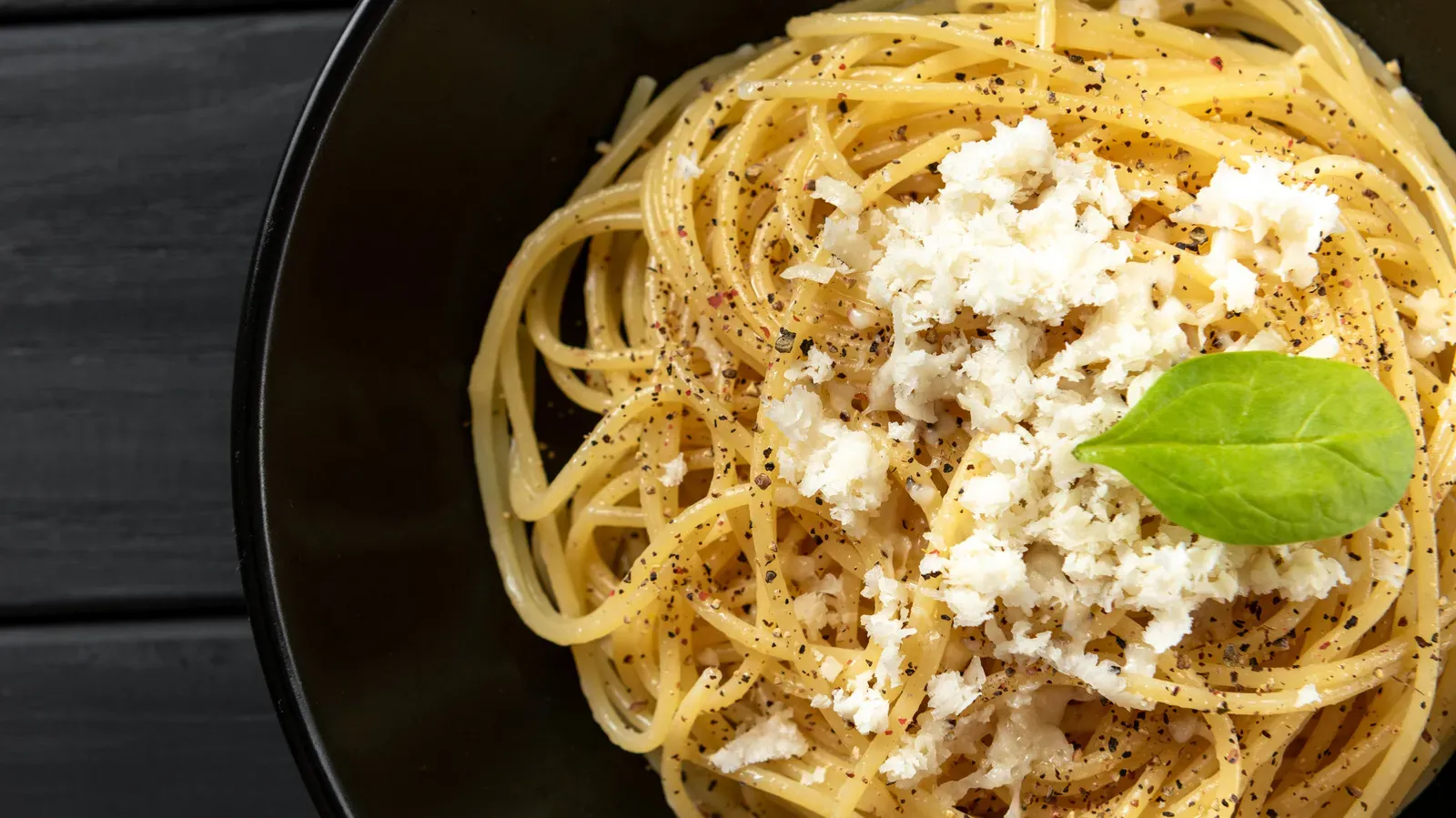
More Than Just Pasta and Cheese
So,What Exactly is Cacio e Pepe? Forget complicated sauces and long ingredient lists. At its heart, this dish is the epitome of Roman cucina povera – "poor kitchen" cooking. It originated from Roman shepherds who needed simple, portable ingredients that wouldn't spoil easily. They had dried pasta, aged Pecorino Romano cheese (made from sheep's milk), and black pepper. That's it. Three core ingredients, plus the magic ingredient: pasta water.
The beauty lies in this stark simplicity. There's nowhere to hide. Every component has to pull its weight. The quality of the Pecorino is crucial; it needs to be aged enough to grate finely and melt properly. The black pepper should be freshly ground, providing a sharp, aromatic bite that cuts through the richness. And the pasta itself, often tonnarelli or spaghetti, serves as the perfect vehicle for that sparse yet incredibly flavorful coating.
The Emulsion Secret
Getting that signature creamy sauce without using butter, cream, or olive oil is the real trick here. It's all about creating an emulsion. You cook the pasta in salted water. While the pasta cooks, you grind black pepper, often toasting it briefly in the warm pasta pot to release its aroma. You grate a generous amount of Pecorino Romano.
The magic happens when you combine the starchy pasta water with the grated cheese and pepper off the heat. The heat from the pasta and the water melts the cheese, and the starch from the pasta water helps bind it all together into a smooth, glossy sauce that clings to each strand of pasta. It takes practice to get the ratio of water to cheese just right – too much water and it's watery, too little and it's clumpy.
Core Ingredients | Role |
|---|---|
Pasta (Tonnarelli/Spaghetti) | Vehicle for sauce, source of starch |
Pecorino Romano Cheese | Saltiness, sharpness, creaminess |
Black Pepper | Aroma, bite, cuts richness |
Pasta Water | Starch for emulsion, binds sauce |
A Roman Staple
Cacio e Pepe isn't just a recipe; it's a cultural icon in Rome. It's one of the four classic Roman pasta dishes, alongside Carbonara, Amatriciana, and Gricia. While often seen as the simplest, many Roman chefs will tell you it's the hardest to perfect precisely because of its minimal nature. There's no room for error in technique or ingredient quality.
Eating Cacio e Pepe in Rome is usually a no-frills experience. It arrives at the table looking deceptively simple, but the first bite reveals a complex interplay of salty, peppery, and starchy flavors. It’s a dish that commands respect for its history and its reliance on technique over extravagance. Understanding this traditional foundation is key when looking at how other places, like The Cheesecake Factory, approach their version.
The Cheesecake Factory Cacio e Pepe Their Unique Spin
Ingredient Swaps and Additions
Alright, let's talk about how The Cheesecake Factory takes on Cacio e Pepe. If you're expecting the minimalist Roman trio, prepare for a plot twist. Their menu description usually mentions black pepper and Pecorino Romano, which sounds promising. But look closer, or taste it, and you'll find it's not quite the same story. While they use Pecorino, they often blend it with other cheeses to achieve a different melt and flavor profile. More significantly, they add cream or butter. This immediately shifts it away from the traditional emulsion technique that relies solely on starch and cheese fat.
This isn't necessarily a bad thing, depending on what you're looking for. It results in a richer, often thicker, and more consistently creamy sauce than a finicky traditional version. It's a reliable creaminess that doesn't require the precise timing and technique of getting pasta water and cheese to emulsify perfectly. Think of it less as a direct translation and more as an interpretation, one that prioritizes a certain kind of richness and stability over the sharp, nuanced simplicity of the original.
The Texture and Flavor Profile
So, what does this mean for the final dish? The texture is typically much heavier and coatier than a true Cacio e Pepe. Instead of a light, almost ethereal glaze created by the emulsion, you get a dense, creamy sauce that clings to the pasta with more heft. The flavor also changes. The sharp, salty tang of pure Pecorino and the bite of fresh black pepper are often mellowed out by the addition of cream and other cheeses. It becomes a milder, richer, and less intensely peppery dish.
It's a different kind of comfort food. If traditional Cacio e Pepe is a sharp, sophisticated espresso, The Cheesecake Factory's version is more like a creamy, flavored latte. It's designed to be broadly appealing, satisfying that craving for rich, cheesy pasta, rather than hitting the specific, precise notes of the Roman classic. This isThe Cheesecake Factory Cacio e Pepe Their Unique Spinin action – taking a simple concept and giving it their signature, more opulent treatment.
So, the question becomes: Are you craving the Roman classic, or a creamy, cheesy pasta dish with peppery notes?
How the Cheesecake Factory Cacio e Pepe Compares
How the Cheesecake Factory Cacio e Pepe Compares
Setting Expectations: Traditional vs. Chain
So,How the Cheesecake Factory Cacio e Pepe Comparesto the Roman original? It's less of a comparison and more of a contrast. Think of it like comparing a finely aged single malt scotch to a blended whiskey with cola. Both might give you a buzz, but the experience and the underlying craft are fundamentally different. The traditional version is about showcasing the purity and reaction of minimal, high-quality ingredients through precise technique. It's sharp, nuanced, and surprisingly light for how flavorful it is.
The Cheesecake Factory's take, while undeniably popular with their customers, prioritizes richness, consistency, and broad appeal. The added cream or butter gives it a predictable, luscious texture that doesn't rely on the tricky emulsion. The flavor profile is softer, less intensely Pecorino-forward, and often less peppery than a classic. It's designed to be a crowd-pleaser, fitting into their extensive menu of comforting, often indulgent, dishes.
Feature | Traditional Cacio e Pepe | Cheesecake Factory Cacio e Pepe |
|---|---|---|
Sauce Base | Pasta water & Pecorino emulsion | Cream/Butter + Cheese Blend |
Texture | Light, glossy, clings to pasta | Thicker, heavier, coatier |
Flavor Profile | Sharp Pecorino, intense black pepper | Milder cheese blend, less pronounced pepper |
Key Technique | Precise emulsion off heat | Standard creamy sauce preparation |
Is the Cheesecake Factory Cacio e Pepe Worth Trying?
Is the Cheesecake Factory Cacio e Pepe Worth Trying?
Setting Your Expectations Right
So, is theCheesecake Factory Cacio e Pepe Worth Trying? Let's be clear: if you're a purist who's had the real-deal Cacio e Pepe in Rome, expecting the same sharp, minimalist elegance, you're likely to be disappointed. It's not that dish. It doesn't aim to be. Their version is a different beast entirely, designed for a different palate and setting. It's rich, it's creamy thanks to the added fats, and it's generally milder in its cheesy, peppery punch than the Roman original.
Think of it less as an authentic Italian experience and more as a "Cheesecake Factory take on a Roman classic." Just like their Thai Lettuce Wraps aren't exactly street food from Bangkok, their Cacio e Pepe adapts the core concept into something that fits their established menu and customer base. It's comfort food, Americanized and scaled up.
Who Might Actually Enjoy It?
so who *would* enjoy this? Someone who loves creamy, cheesy pasta dishes is a good candidate. If you find traditional Cacio e Pepe a bit too intense, too sharp, or even a little intimidating in its simplicity, the Cheesecake Factory's version offers a softer landing. It's approachable, consistently rich, and undeniably satisfying in that hearty, decadent way The Cheesecake Factory excels at. It’s also a safe bet for someone who wants a familiar pasta dish but is curious about the name "Cacio e Pepe" without diving headfirst into strict authenticity.
If your idea of great pasta involves a generous, clingy sauce that coats every noodle and leaves you feeling comfortably full, this might hit the spot. It’s the kind of dish you order when you want something reliably tasty and don't want to think too hard about regional Italian variations or historical purity. It’s pasta designed for mass appeal, not for winning over Roman grandmothers.
What are you looking for in a pasta dish?
- Authentic Roman flavors and technique?
- A rich, creamy, cheesy comfort meal?
- Something reliably consistent from a large chain?
- A dish with a familiar name but a softer flavor profile?
The Verdict: Try It With Open Mind
So, should you order it? If you go in knowing it's a creamy, cheesy pasta dish *inspired* by Cacio e Pepe rather than a strict recreation, you might genuinely enjoy it. Don's expect the delicate dance of pepper, Pecorino, and starchy water. Expect a richer, heavier sauce that leans more towards American-style creamy pasta. It’s a perfectly fine dish within the context of The Cheesecake Factory’s menu. Just manage your expectations. It’s not Rome, but it is The Cheesecake Factory, and sometimes, that's exactly what you're in the mood for.
The Verdict on Cheesecake Factory Cacio e Pepe
So, after looking at the classic and the Cheesecake Factory's rendition, where does that leave us? Traditional cacio e pepe is about stark simplicity and perfect execution – coaxing a creamy sauce from just cheese, pepper, and pasta water. The Cheesecake Factory version, from diner accounts and menu descriptions, often leans into richness with added cream and sometimes other elements, like those chili flakes mentioned earlier. Is it the cacio e pepe Romans argue over? Probably not. But is it a satisfying, creamy pasta dish served in generous portions that fits the Cheesecake Factory vibe? For many, absolutely. It's less a faithful historical reenactment and more a crowd-pleasing interpretation, a common practice in chain restaurants adapting classic dishes for a broader palate. Don't expect ancient Rome, but you might still get a decent bowl of pasta.