
Table of Contents
When you hear "cheese cake," your first thought might be dessert, but for jazz fans, it immediately brings to mind the iconic track and album by tenor saxophonist Dexter Gordon. Thecheese cake dexter gordonrecording captured a specific moment in time, a live session in Copenhagen that became a cornerstone of his discography. This wasn't just another gig; it was a convergence of talent and timing that resulted in something enduring. In this piece, we'll cut into the details of this classic. We'll explore how this live album came to be, who was on the bandstand with Dexter that night, and why "Cheese Cake" continues to resonate decades later. Consider this your guide to understanding the ingredients that made this particular slice of jazz history so satisfying. Get ready to dig into the story behind the music.
Dexter Gordon's Iconic "Cheese Cake" Track
Dexter Gordon's Iconic "Cheese Cake" Track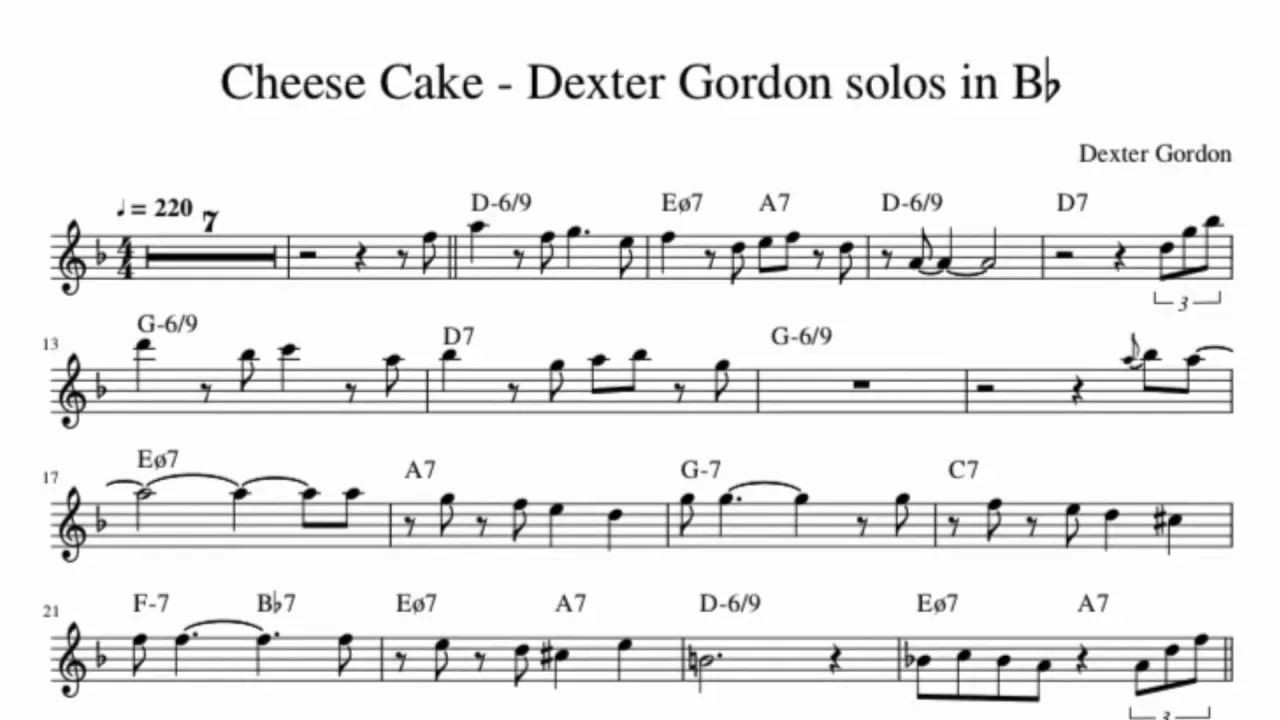
The Sound of Something Sweet and Swingin'
so let's talk about this tune, "Cheese Cake." It's not complicated, which is part of its brilliance. When you listen toDexter Gordon's Iconic "Cheese Cake" Track, you immediately get that classic Blue Note feel, even though this particular version is from a live recording in Copenhagen. It’s got this cool, laid-back groove, but with Dexter's big, warm tenor sound right out front. The melody is simple, memorable, almost singable. It’s the kind of tune that gets stuck in your head in the best way possible. Dexter wasn't afraid to take his time, letting notes hang in the air before dropping in with a flurry of ideas. It feels relaxed, yet incredibly focused.
Why Musicians Love This Tune
Musicians, especially those just getting into jazz improvisation, often gravitate towards "Cheese Cake." Why? Because the chord changes aren't some labyrinthine harmonic obstacle course. They're straightforward, logical. This simplicity gives players a solid foundation to really stretch out and explore ideas without getting lost. Dexter himself demonstrates this perfectly on the recording; he takes a long solo, clocking in at over 14 minutes on the album version, and he never sounds like he's running out of steam or repeating himself. That's the mark of a master – making something relatively simple sound endlessly fascinating.
- Simple, memorable melody.
- Straightforward chord changes, great for improvising.
- Dexter's signature big tenor sound.
- Showcases Gordon's ability to develop long solos.
Recording the Classic Cheese Cake Dexter Gordon Album
Recording the Classic Cheese Cake Dexter Gordon Album
That Night in Copenhagen
So, how did this specificRecording the Classic Cheese Cake Dexter Gordon Albumcome about? Picture this: it's June 11, 1964, and Dexter Gordon is playing a gig at Jazzhus Montmartre in Copenhagen. This club was legendary, a real hotspot for American jazz musicians when they were touring Europe. Dexter had actually moved to Copenhagen around this time, finding a welcoming scene there. Danish radio was often recording performances at the Montmartre, capturing these moments live. This particular night, they were rolling tape, probably not knowing they were documenting something that would become a key piece of Dexter's legacy decades later. It wasn't a studio session with endless takes; this was the band on the stand, playing for an audience.
From Tape to Turntable
The tapes from that 1964 Montmartre gig didn't see the light of day immediately. They sat for quite a while. It wasn't until 1979 that SteepleChase Records, a Danish label known for releasing live recordings, got hold of them. They put it out as "Cheese Cake," subtitled "Dexter In Radioland Vol. 2." It’s interesting how many classic live jazz albums come out years after the actual performance, unearthed from radio archives or private collections. It gives you a raw, unedited snapshot of the artist in action, for better or worse. In this case, it was definitely for the better.
- Recorded: June 11, 1964
- Location: Jazzhus Montmartre, Copenhagen, Denmark
- Recorded by: Danmarks Radio
- Released: 1979
- Label: SteepleChase Records
The Musicians on the Cheese Cake Dexter Gordon Session
The Musicians on the Cheese Cake Dexter Gordon Session
The Piano Man from Barcelona
so Dexter's the star, obviously, but you can't have a great jazz record without a killer rhythm section. OnThe Musicians on the Cheese Cake Dexter Gordon Session, he had some serious talent backing him up. On piano was Tete Montoliu. Now, Tete was a blind pianist from Barcelona, and man, could he play. He had this incredible touch and harmonic sense. He wasn't just comping behind Dexter; he was interacting, pushing, pulling, adding his own flavor. His solos on the album are fantastic too, intricate and swinging. It wasn't just a gig for him; you can hear he was completely locked in with Dexter and the groove.
A Danish Powerhouse Rhythm Section
Holding down the bottom end and the pulse were two Danish giants: Niels-Henning Ørsted Pedersen on bass and Alex Riel on drums. NHØP, as he was known, was unbelievably young at the time, but already playing with the maturity of someone twice his age. His bass lines are melodic and rock-solid, providing the perfect foundation. And Alex Riel? He was the engine room. His drumming is crisp, swinging hard without ever getting in the way. This wasn't just a collection of guys; they were a working unit, especially in the European scene, and their chemistry is palpable on the "Cheese Cake" recording. They knew how to support Dexter while still bringing their own energy.
- Dexter Gordon: Tenor Saxophone
- Tete Montoliu: Piano
- Niels-Henning Ørsted Pedersen: Bass
- Alex Riel: Drums
Why "Cheese Cake" Remains a Jazz Standard
Why "Cheese Cake" Remains a Jazz Standard
The Timeless Appeal of a Simple Tune
So, why doesWhy "Cheese Cake" Remains a Jazz Standard? It boils down to a few things. First, the tune itself is just good. It's catchy without being corny, simple enough to grasp on first listen, but deep enough to reward repeated listening. Dexter's recording is, of course, the definitive version, showcasing his mastery over a straightforward form. He takes this simple melody and these basic changes and builds something monumental. It's a masterclass in melodic development and rhythmic phrasing. Musicians keep coming back to it because it's a great vehicle for improvisation, a place where you can focus on storytelling through your horn or instrument without getting bogged down in harmonic complexity.
The Lasting Flavor of Cheese Cake Dexter Gordon
So, there you have it. Thecheese cake dexter gordonstory isn't just about a catchy tune; it's about a moment captured live, showcasing a master at work with a killer rhythm section. This album, released years after the fact, solidified the track's place and reminded everyone why Dexter was one of the greats. It wasn't studio trickery, just four guys in Copenhagen making magic happen. Decades later, the simple, swinging groove and Dexter's seemingly endless flow of ideas still make this "Cheese Cake" a dish worth revisiting.