Table of Contents
Ever bitten into something so outrageously good it makes you question everything you thought you knew about dessert? If you haven't experienced Knafeh, then you're missing out on perhaps the most iconic arabic cheese dessert. Forget soggy pastries and bland fillings; Knafeh is a symphony of textures and flavors – crispy, golden pastry cradling warm, stretchy cheese, all drowned in a fragrant, sweet syrup. It's the kind of treat that stops conversations and demands your full attention. You might have seen it bubbling away in shop windows or heard tales of its legendary status at family gatherings. But what exactly goes into this magical creation, and how do you even begin to make it yourself? Don't worry, we're here to break it down. We'll explore the different styles of this beloved arabic cheese dessert, pinpoint the essential ingredients you'll need, walk you through the steps to bring it to life in your own kitchen, share some insider tips for perfect results, and answer all those burning questions you might have. Get ready to embark on a seriously sweet journey.
What Exactly is This Famous Arabic Cheese Dessert?
What Exactly is This Famous Arabic Cheese Dessert?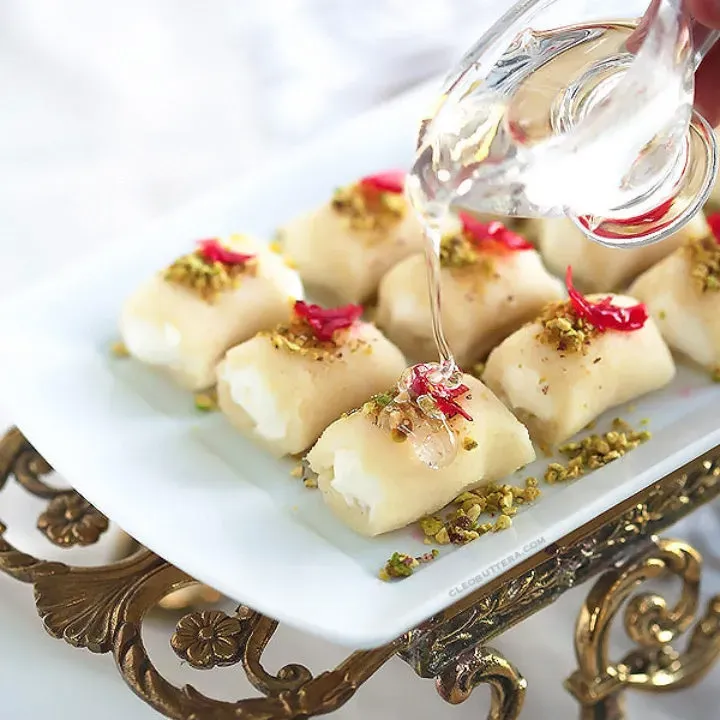
It's More Than Just Sweet Cheese
so you've heard the buzz about Knafeh, the king of arabic cheese dessert. Let's get straight to it. At its heart, Knafeh is a pastry dish. But calling it just "pastry" is like calling a supercar "a vehicle." It's usually made with shredded phyllo dough, called kataifi, or sometimes a fine semolina dough. This forms the crispy, golden base and top layer. Sandwiched in between? A special kind of cheese. This isn't your standard cheddar or mozzarella, though mozzarella often makes an appearance alongside the traditional stuff. The magic happens when this gets baked or heated until the cheese is molten and gooey. Finally, a generous pour of hot, sugar syrup, often scented with rosewater or orange blossom water, saturates the whole thing, creating that irresistible sweet stickiness.
A Dessert with Deep Roots
This isn't some newfangled trend; Knafeh has been around for centuries. Its history is tied to the Levant region, particularly Palestine, with Nablus being famously associated with the "Knafeh Nabulsieh," a celebrated version using a specific cheese and fine semolina. Picture this: a bustling souk, the aroma of sweet syrup filling the air, and trays of vibrant orange Knafeh fresh out of the oven. It's not just a dessert; it's a cultural experience, often served at celebrations, during Ramadan, or simply when friends gather. It's a taste of tradition, a comforting classic that people argue passionately over whose grandmother makes the best version. It’s the definitive arabic cheese dessert for many.
So, to recap, the essential elements are:
- Crispy pastry (kataifi or semolina)
- Melted, stretchy cheese (often Akkawi or a mix)
- Fragrant sugar syrup (rosewater/orange blossom)
The Two Faces of Knafeh: Coarse (Khishneh) vs. Fine (Na'ameh)
The Two Faces of Knafeh: Coarse (Khishneh) vs. Fine (Na'ameh)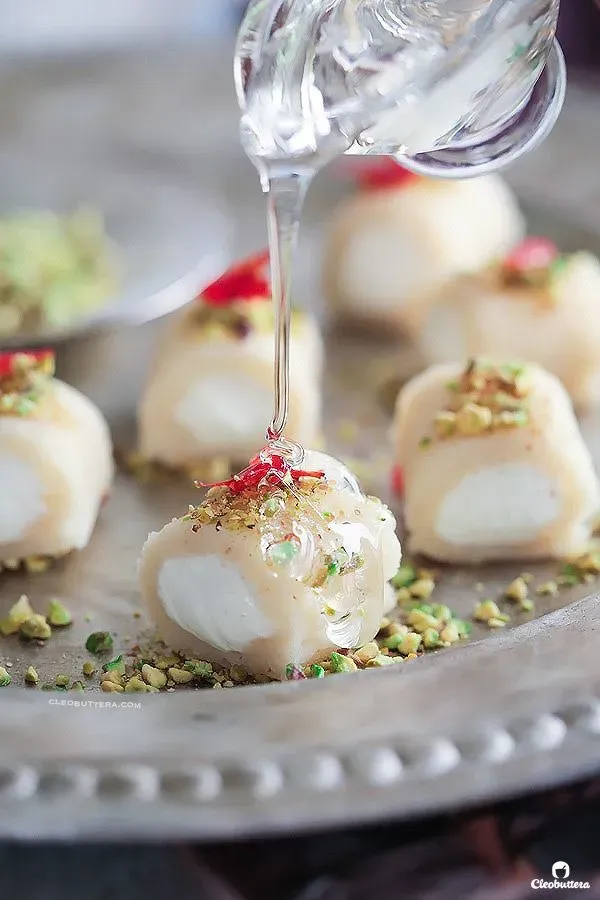
The Crunchy Charm of Khishneh
Alright, so when people talk about Knafeh, they're usually picturing one of two main styles. The first is Khishneh, which translates roughly to "coarse" or "rough." This is the one made with those distinctive shredded strands of phyllo dough, the kataifi we mentioned earlier. Imagine thin, vermicelli-like pastry threads that get chopped up and layered. When baked, these strands crisp up beautifully, giving you that fantastic crunch with every bite. It creates a lovely textural contrast with the soft, melted cheese underneath. If you like a good bite and audible crispness in your dessert, Khishneh is likely your jam.
The Smooth Elegance of Na'ameh
Then you have Na'ameh, meaning "fine" or "smooth." This version uses a dough made from fine semolina instead of the shredded phyllo. The semolina is worked into a paste, sometimes with cheese mixed directly into the dough itself, or it forms a smooth, dense layer that encases the cheese filling. The top surface is often colored a vibrant orange or red using food coloring, which is how many instantly recognize it, especially the famous Knafeh Nabulsieh from Nablus. Na'ameh has a different texture; it's less about the crunch and more about a tender, slightly chewy base that melts in your mouth along with the cheese.
So, how do these two stack up?
- Khishneh uses shredded kataifi pastry for a crunchy texture.
- Na'ameh uses fine semolina dough for a smooth, tender texture.
- Khishneh is often golden brown, while Na'ameh is frequently dyed orange.
- Both feature that signature stretchy cheese and sweet syrup.
Gathering Your Arsenal: Ingredients for Knafeh Bliss
Gathering Your Arsenal: Ingredients for Knafeh Bliss
The Foundation: Pastry and That Glorious Cheese
Alright, let's talk shopping list for this epic arabic cheese dessert. First up, you need the pastry. If you're making the Khishneh style, you're looking for kataifi dough. Think of it as shredded phyllo, like fine, dry vermicelli. You can usually find this in the frozen section of Middle Eastern grocery stores. It looks like a bird's nest of pastry threads. The other crucial player is the cheese. Traditional Knafeh uses a mild, unsalted cheese called Akkawi, or sometimes Nabulsi cheese, which is brined but needs soaking to remove salt. Since those can be tricky to source, a lot of home cooks use a mix. Low-moisture mozzarella is your friend here because it melts beautifully and gives you that epic cheese pull. Some folks mix mozzarella with ricotta or even a mild halloumi for texture and tang. The key is a cheese that melts smoothly and doesn't have too much water or salt.
Sweetness and Fat: Syrup and Butter's Role
Next on the list is the syrup, arguably as important as the cheese for this arabic cheese dessert. This is a simple sugar syrup, but it gets its signature fragrance from rose water or orange blossom water. Don't skip these; they add that distinct, almost floral aroma that makes Knafeh, well, Knafeh. You'll need sugar, water, and a splash of one or both of those floral waters. A squeeze of lemon juice is often added to prevent the syrup from crystallizing. Finally, you need fat – and usually, that means a generous amount of clarified butter or ghee. This is what coats the kataifi threads, helping them crisp up to a beautiful golden brown. Don't be shy with it; it's crucial for both flavor and texture. Regular butter works too, but clarified butter (ghee) has a higher smoke point and gives a cleaner flavor.
So, to break down the must-haves:
- Kataifi dough (for Khishneh) or fine semolina (for Na'ameh)
- Meltable, low-salt cheese (Akkawi, Nabulsi, or mozzarella/ricotta mix)
- Granulated sugar
- Water
- Rose water or orange blossom water
- Clarified butter or ghee
The Process: Making This Iconic Arabic Cheese Dessert at Home
The Process: Making This Iconic Arabic Cheese Dessert at Home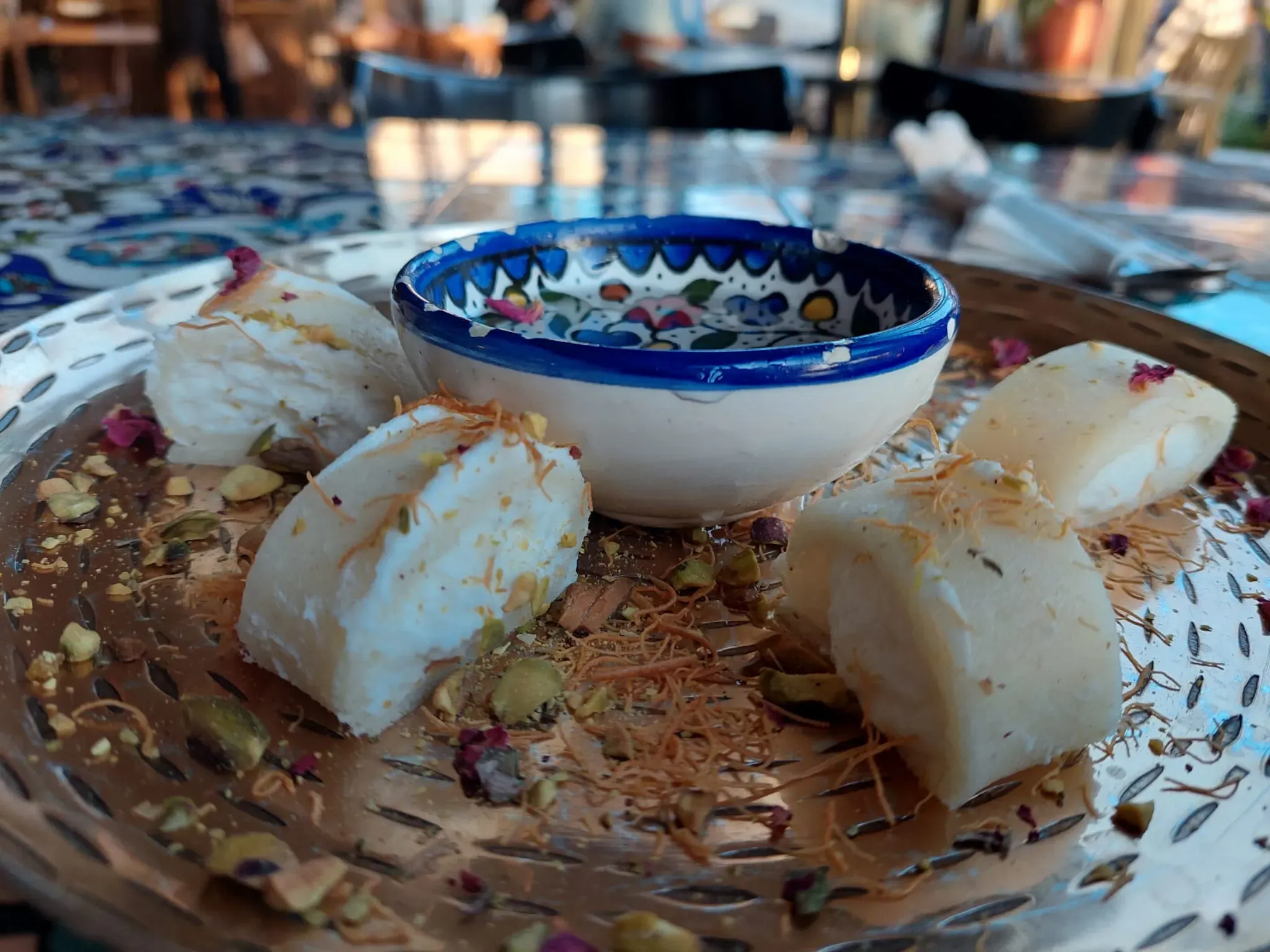
Getting Your Hands Sticky (In a Good Way)
so you've gathered your ingredients for this magnificent arabic cheese dessert. Now comes the fun part, or maybe the slightly intimidating part depending on your kitchen confidence: putting it all together. Don't sweat it too much; it's more assembly than advanced molecular gastronomy. The first major step in the process of making this iconic arabic cheese dessert at home involves prepping your kataifi dough. If it was frozen, you need to thaw it properly, usually overnight in the fridge. Then, you'll want to shred it or pull it apart into smaller pieces. Think short, manageable strands, not a giant tangled mess. This is where the clarified butter comes in; you need to coat those kataifi threads generously. Every single strand needs a kiss of that golden fat. This ensures it crisps up beautifully and doesn't turn into a dry, sad brick in the oven. While you're doing that, your cheese should be prepped too – drained, maybe soaked if it's Akkawi to get rid of excess salt, and then shredded or sliced thinly. Layering is key: a solid base layer of buttered kataifi, then the cheese spread evenly, and finally, another layer of buttered kataifi on top, making sure it's packed down nicely to prevent gaps.
Pro Tips for Knafeh Success
Pro Tips for Knafeh Success
Getting That Perfect Crisp and Gooey Center
so you've got the layers down for this magnificent arabic cheese dessert. But turning those raw ingredients into the golden, bubbling, cheese-pulling dream requires a few pro tips. One big one is making sure that kataifi is *really* saturated with butter. Don't be shy. Think of it like coating every single tiny strand individually. Another game-changer, especially for that classic Knafeh Nabulsieh look, is adding a tiny bit of food coloring (the orange kind!) to the butter you use for the bottom layer. This gives you that signature vibrant hue. Also, pressing the layers down firmly before baking is crucial. You want a compact disk of deliciousness, not a loose pile. And the cheese? Make absolutely sure it's drained well or soaked if needed; excess water equals a less-than-ideal melt. Finally, the syrup needs to be hot when it hits the hot Knafeh right out of the oven. That sizzle is key to absorption and creating that perfect sweet, sticky finish on your homemade arabic cheese dessert.
Beyond Knafeh: Other Arabic Cheese Desserts Worth Trying
Beyond Knafeh: Other Arabic Cheese Desserts Worth Trying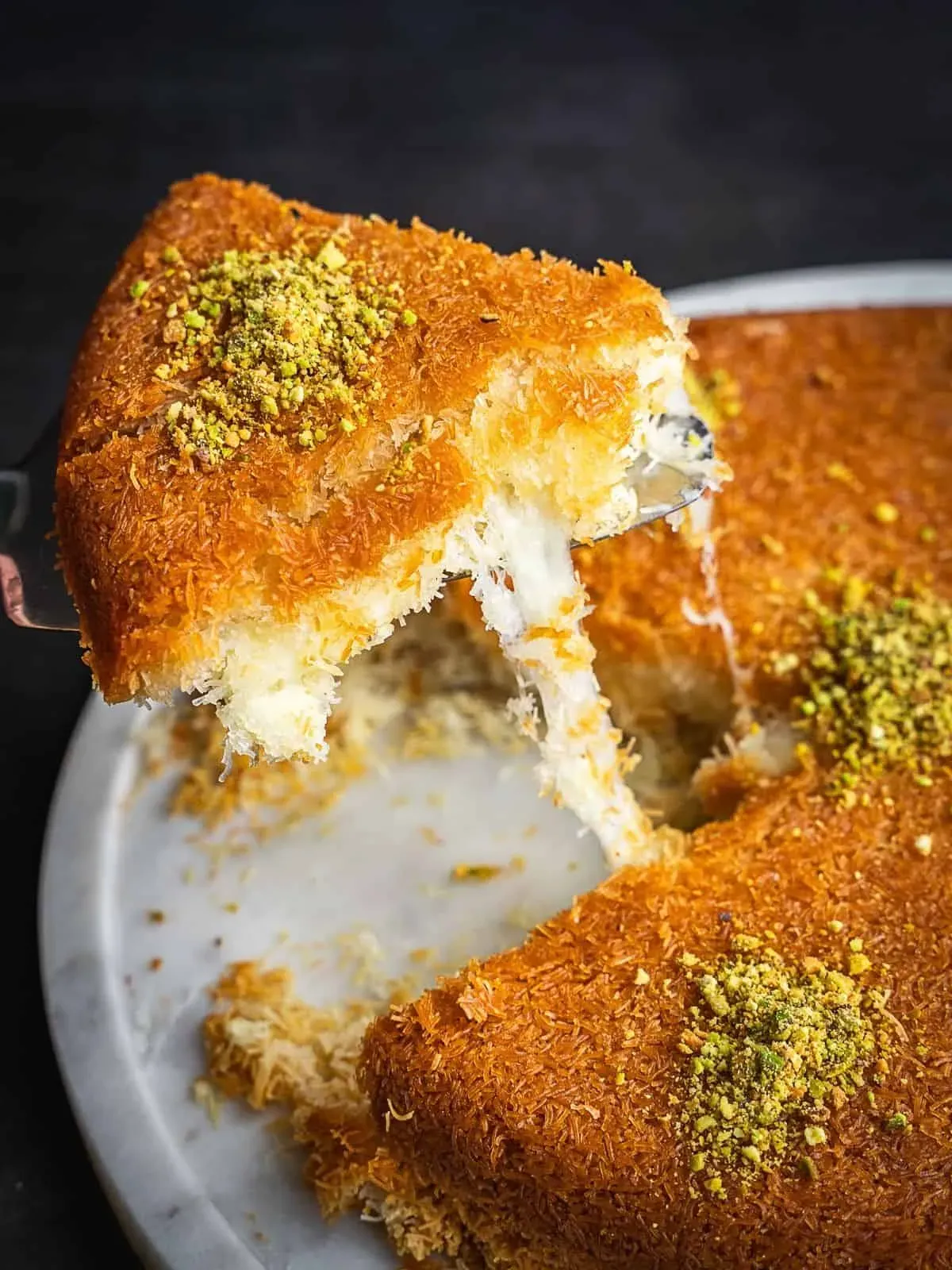
Exploring More Sweet, Cheesy Delights
While Knafeh often steals the spotlight when you talk about arabic cheese dessert, the sweet landscape of the Middle East offers other equally captivating cheesy creations. It’s not a one-hit wonder situation. Take, for instance, Halawet el Jibn. This beauty is made from a dough of cheese and semolina, rolled thin, filled with clotted cream (ashta), and then drizzled with that familiar, fragrant syrup and often garnished with pistachios. It's softer, rollable, and has a delicate chewiness that's completely different from Knafeh's crispness. Think of it as the elegant cousin to Knafeh's more boisterous, crunchy personality. Exploring these other options reveals just how versatile and beloved cheese is in the region's sweet traditions.
Common Questions About Making Arabic Cheese Dessert (FAQs)
Common Questions About Making Arabic Cheese Dessert (FAQs)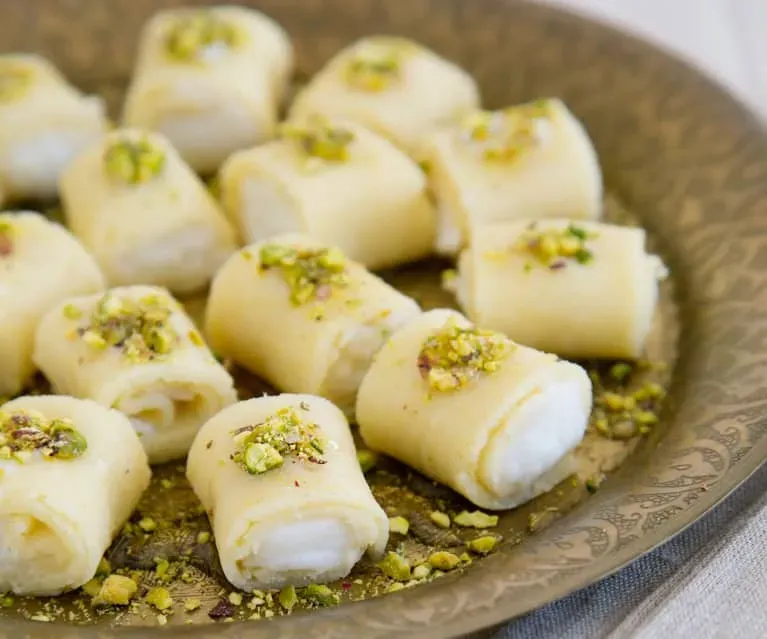
Can I Use Regular Mozzarella for This Arabic Cheese Dessert?
Look, if you don't live near a specialized Middle Eastern grocer stocking Akkawi or Nabulsi cheese, don't abandon ship on making this arabic cheese dessert. Yes, you can absolutely use regular low-moisture mozzarella. It's widely available and melts beautifully, giving you that essential cheese pull. Just make sure it's low-moisture; the fresh stuff packed in water will make your Knafeh soggy, which is a culinary tragedy. Some people mix mozzarella with a bit of ricotta for a slightly different texture or tang, or even a mild halloumi for a firmer bite within the melt. The goal is a cheese that melts smoothly without releasing a ton of water or being overly salty. So, mozzarella is your perfectly acceptable Plan B, and honestly, for many, it's Plan A.
How Do I Store and Reheat Leftover Knafeh?
Assuming you actually have leftovers of this addictive arabic cheese dessert (a rare feat in my experience), storing it is straightforward. Let it cool completely, then cover it tightly with plastic wrap or foil, or transfer it to an airtight container. It'll keep in the fridge for up to three days. Reheating is key to getting back some of that magic. The microwave will make the cheese gooey again but sacrifices the crispness of the kataifi. For the best results, use a toaster oven or a conventional oven at around 350°F (175°C) for 10-15 minutes until it's heated through and the top layer crisps up again. A brief moment under the broiler can also revive the crunch, but watch it like a hawk – it goes from golden to charcoal faster than you can say "more syrup."
Quick Reheating Guide:
- Fridge: Up to 3 days, covered tightly.
- Microwave: Quickest, but loses crispness.
- Oven (350°F/175°C): Best for restoring crispness and gooey cheese.
- Toaster Oven: Excellent for individual portions.
Why Didn't My Knafeh Get Crispy?
Ah, the dreaded soggy Knafeh. It's a common pitfall when making this arabic cheese dessert at home. The main culprit is usually insufficient fat coating the kataifi dough. Remember how we talked about coating every strand with clarified butter or ghee? If you skimp here, the pastry won't crisp up; it'll just get dry and brittle, or worse, stay soft and doughy. Another reason could be not pressing the layers down firmly enough, leading to uneven heating. Also, pouring cold syrup over the hot Knafeh can shock the pastry and affect the texture; the syrup should be hot when it hits the hot dessert. Finally, your oven temperature might be off, or you didn't bake it long enough. It needs enough time for that butter to work its magic and turn the pastry golden brown and crunchy.
Wrapping Up Your Knafeh Adventure
So there you have it. Knafeh, the undisputed champion of arabic cheese dessert, isn't just a dish; it's an experience. It's the sticky fingers, the syrupy smile, the pure, unadulterated joy of warm cheese and crispy pastry. Mastering it at home might seem daunting, but it's entirely achievable with a little patience and the right guidance. Whether you nail it on the first try or learn a few things along the way (like maybe don't use shredded cheddar, trust us), the effort is absolutely worth the reward. This dessert holds a special place in countless homes for good reason. Give it a go, share it with people you like, and understand why this cheesy marvel rules the dessert table.